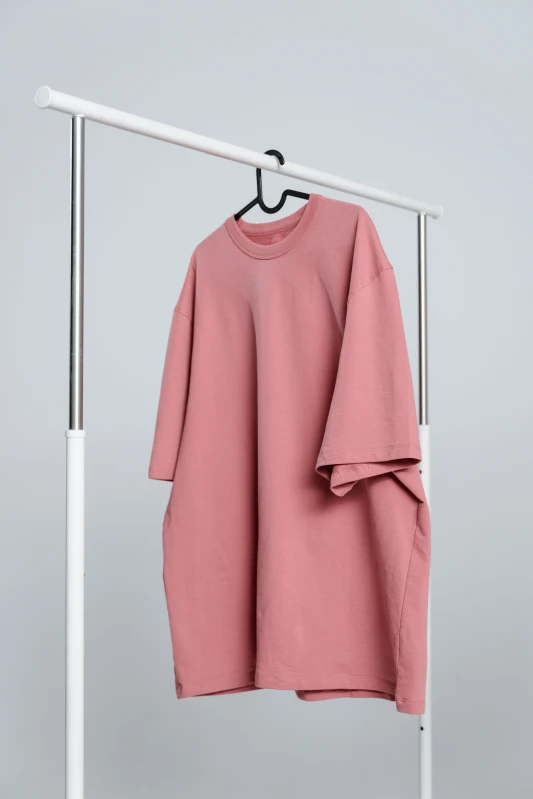
MOQ stands for Minimum Order Quantity — it is the smallest number of units a manufacturer will produce in a single production run. If a factory has an MOQ of 300 pieces per colour, you must order at least 300 units of that colour before the factory will begin production.
At TEXVENTURE, we field questions about MOQs from brand founders every single week. Whether you're a startup ordering your first 100 tees or an established brand scaling to 10,000 hoodies, understanding MOQs is fundamental to budgeting, planning, and maintaining a productive relationship with your factory.
Why Do Factories Have MOQs?
MOQs exist for one reason: production economics. Every time a factory starts a new order, there are fixed setup costs that don't change regardless of how many units are produced:
A factory that accepts an order of 50 pieces absorbs the same fixed costs as one producing 5,000 — but spreads those costs across far fewer units, making the per-unit cost prohibitively high or the order outright unprofitable.
Typical MOQ Ranges by Product Category
MOQs vary dramatically depending on the type of garment, fabric complexity, and the factory's capacity:
| Product Category | Typical MOQ Range | TEXVENTURE MOQ |
|---|---|---|
| T-shirts & basic knits | 200–500 pcs | 100 pcs |
| Hoodies & sweatshirts | 300–500 pcs | 100 pcs |
| Denim / jeans | 500–1,000 pcs | 300 pcs |
| Outerwear / jackets | 500–1,000 pcs | 200 pcs |
| Activewear | 200–500 pcs | 100 pcs |
| 童装 (Children's wear) | 300–500 pcs | 150 pcs |
| Dress / formal wear | 200–500 pcs | 100 pcs |
At TEXVENTURE, our MOQ starts at just 100 pieces per colourway — one of the lowest in the Bangladesh garment industry. We built this intentionally to serve startups and DTC brands who need quality production without massive upfront investment.
How MOQ Affects Your Per-Unit Cost
The relationship between MOQ and unit cost is inversely proportional — as order quantity goes up, per-unit cost goes down. Here's a real-world example using a standard 380 GSM hoodie:
| Order Quantity | Per-Unit Cost | Total Cost |
|---|---|---|
| 100 pcs | $12.50 | $1,250 |
| 300 pcs | $10.95 | $3,285 |
| 500 pcs | $10.20 | $5,100 |
| 1,000 pcs | $9.40 | $9,400 |
| 3,000 pcs | $8.10 | $24,300 |
| 5,000+ pcs | $7.20 | $36,000+ |
At 100 pieces, you're paying a premium because the fixed costs (fabric setup, pattern grading, machine calibration) are distributed across fewer units. At 5,000 pieces, those same fixed costs become negligible per unit.
How to Negotiate a Lower MOQ
If a factory's standard MOQ is higher than what you need, here are proven negotiation strategies:
1. Accept a higher per-unit price
Factories will often reduce MOQs if you agree to pay 10–20% more per unit. This covers their risk and setup costs on a smaller run.
2. Use stock fabrics
Custom-dyed fabrics require minimum yardage. Choosing from a factory's existing fabric inventory eliminates the dyeing MOQ entirely.
3. Simplify the design
Complex constructions with multiple trims and operations increase setup time. Simplifying your design can make a smaller order more economically viable.
4. Combine styles
Ordering 2–3 different styles in the same fabric can help a factory justify the fabric MOQ while giving you a lower per-style minimum.
5. Pay upfront
Offering 50–100% prepayment reduces the factory's financial risk, making them more willing to accept smaller orders.
6. Use a buying house or sourcing partner
Buying houses like TEXVENTURE aggregate orders across multiple brands, enabling us to place larger aggregate orders with factories while each brand only commits to their portion.
MOQ vs. Sampling
It's important to distinguish between sample orders and production orders:
At TEXVENTURE, we offer pre-production samples for $75–$100 per style (credited toward your first production order). This lets you validate quality before committing to the full MOQ.
Common MOQ Mistakes to Avoid
Ordering exactly the MOQ for your first run
Always order slightly above the MOQ. Fabric shrinkage, QC rejects, and sampling needs can reduce your sellable units by 3–5%.
Ignoring colourway minimums
Some factories set MOQs per colour, not per style. If the MOQ is 300 pcs per colour and you want 5 colours, your total minimum is 1,500 — not 300.
Confusing MOQ with production lead time
A lower MOQ doesn't mean faster production. Small orders often wait longer in the queue because they're less profitable for the factory.
Not accounting for trim minimums
Zippers, custom labels, and drawcords often have their own minimums (typically 500–1,000 pieces per colour). Ordering 100 hoodies with 500 minimum zippers means you're paying for excess trims.
When to Increase Your Order Quantity
If you're consistently selling through your initial orders, it's time to scale up. Here are the signs:
Scaling from 300 to 1,000 pieces typically reduces per-unit costs by 12–18% — savings that go directly to your margin or can be reinvested in marketing.
Final Thoughts
MOQs are a fact of garment manufacturing, but they don't have to be a barrier. At TEXVENTURE, we specialise in helping brands of all sizes navigate minimum order requirements — whether you need 100 pieces for a launch collection or 10,000 for a seasonal rollout. Our factory network in Bangladesh is specifically equipped to handle flexible MOQs without compromising on quality.
The key is understanding what drives MOQs, negotiating strategically, and working with a sourcing partner who can bridge the gap between your order volume and factory requirements.
Ready to start your apparel project? TEXVENTURE is a Clothing Manufacturer in Bangladesh — low MOQ from 100 pieces, 20+ certified factories, global delivery.