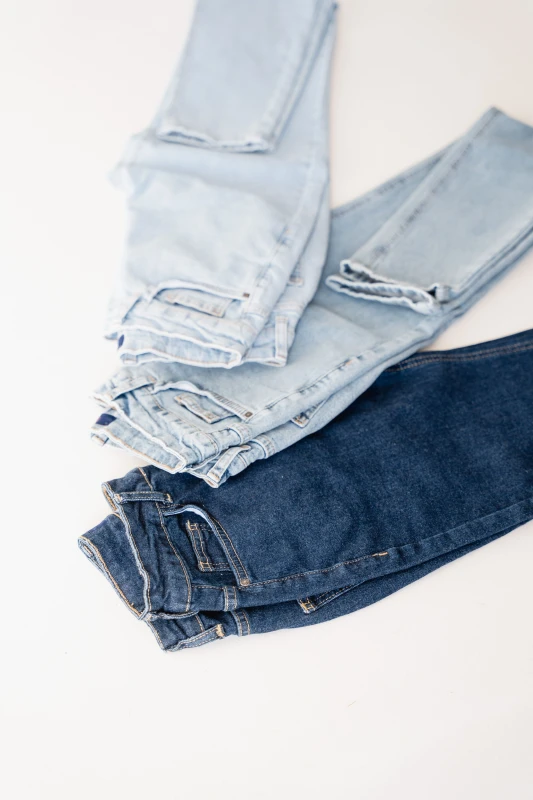
A t-shirt is the simplest garment in most sourcing programmes and the one buyers most often mis-budget. The quoted price looks like a single number, but behind it sits a build-up that starts with yarn count on a knitting machine and ends with a carton on a container. When a buyer asks how much it costs to manufacture a t-shirt, the honest answer is a range, and the useful answer is the arithmetic behind it.
This guide does that arithmetic the way a factory costing department does it: fabric consumption first, then trim, then making charge, then the exclusions nobody mentions at the quotation stage. It gives indicative market ranges you can sanity-check a quote against, isolates the levers that actually move the per-piece number, and explains why two factories can cost the same tech pack and still land far apart.
The logic carries across every knit product. Fabric weight dominates the equation even more heavily in a cost to manufacture a hoodie calculation, because a 350 GSM fleece consumes close to three times the yarn of a light jersey.
What the Number Actually Means: FOB, Ex-Factory and Landed
Before comparing two quotes, confirm they are quoting the same thing. Ex-factory means the price at the factory gate with nothing paid beyond packing. FOB adds inland transport to the port, export documentation and loading. CIF adds ocean freight and insurance to the destination port. DDP carries the goods to a warehouse with duty paid.
A t-shirt at 3.10 USD FOB and another at 3.10 USD DDP are not close in cost; the second is substantially cheaper inside the garment. Ask each supplier to state the Incoterm, the port, the payment terms and the validity period on the quotation itself, and compare only quotes that match on all four.
The Cost Build-Up, Line by Line
A basic cotton t-shirt has five cost pools, and every factory quote is a reshuffle of the same five. The shares below are typical ranges across Bangladesh export knit pricing for a plain crew-neck tee in a 1,000 to 5,000 piece order, not a fixed formula.
| Cost element | Typical share of FOB | What drives it |
|---|---|---|
| Fabric | 45–60% | yarn count, GSM, dyeing and finishing, consumption per piece |
| Trims and accessories | 8–12% | neck tape, labels, thread, buttons, poly bag, carton |
| Making charge | 20–30% | seam count, stitches per inch, machine type, line efficiency |
| Overheads and compliance | 5–8% | utilities, supervision, audit upkeep, effluent treatment |
| Factory margin | 8–12% | order size, payment terms, season loading |
Fabric decides whether a tee feels like a promotional giveaway or a retail product. Consumption comes from the pattern area plus wastage, and a basic adult crew neck in 180 GSM single jersey typically consumes 0.22 to 0.28 kilograms of fabric per piece once cutting waste and shrinkage allowance are included. Multiply by the fabric price per kilogram and you have the largest line on the sheet. This is why what fabric GSM means in practice is a cost question as much as a quality question.
Trims look trivial until you itemise them. Woven main label, care label, size label, neck tape, thread, hangtag, string, poly bag and export carton add up quickly, and a branded hangtag with a custom string can cost more than the sewing thread for the whole garment. Standardising trims across styles is one of the few savings that does not touch the design.
Making charge is labour and machine time, set by the operations a garment needs rather than by the fabric. A basic tee with a ribbed neck and straight hem might be 11 to 14 minutes of line time. Add a dropped shoulder, a double-needle hem and a printed back neck label and the same tee reaches 18 minutes. In a factory running 1,100 pieces per line per day, three extra minutes per garment is a visible cost.
Overheads cover the parts of the business no tech pack mentions: boilers, generators, effluent treatment, quality staff, and the audits behind the certifications your buyer's compliance team asks for. Those costs sit inside the FOB number, not on a separate invoice.
Indicative Per-Piece Ranges by Fabric and Construction
The table below is a planning tool, not a price list. It shows the order of magnitude Bangladesh knit factories typically quote for short-sleeve tees at 1,000 to 3,000 pieces per style, plain dyed, one colourway, standard poly bag and carton packing.
| Style | Fabric specification | Indicative FOB (USD per piece) |
|---|---|---|
| Basic crew neck | 160 GSM single jersey, 100% cotton | 2.10–2.90 |
| Mid-weight retail tee | 180 GSM combed cotton, tubular body | 2.60–3.60 |
| Heavyweight boxy tee | 220–240 GSM single jersey | 3.40–4.80 |
| Basic tee with one-colour front print | 180 GSM, water-based screen print | add 0.35–0.80 |
| Basic tee with placement embroidery | 180 GSM, 6,000 stitch chest logo | add 0.60–1.40 |
| Performance tee | 150 GSM polyester interlock, wicking finish | 2.80–4.00 |
| Organic cotton tee | 180 GSM GOTS-certified jersey | add 0.40–1.00 over conventional |
Read the ranges as a diagnostic. A quote well below the band usually means lighter fabric than specified, lower-grade yarn, downgraded trims, or a factory buying volume it does not have. A quote well above the band is best answered by asking which line carries the difference rather than negotiating the total.
Why Two Factories Quote the Same Tech Pack Differently
Identical tech packs do not produce identical quotes, and the gap is rarely arbitrary. Machine gauge is one reason: a 24-gauge machine knits a finer, denser jersey than an 18-gauge one, and the fabric cost per kilogram differs accordingly. Line efficiency is another. A factory at 75 percent efficiency needs more minutes per garment than one at 90, and that difference lands in the making charge.
Order size and line loading sit behind most of the variance. A factory with a quiet month quotes tight to fill a line; the same factory in peak season quotes high or declines. Then there is what is included: some quotes bundle inspection, lab testing and samples, others exclude all of them. The quote that looks 8 percent dearer can be the cheaper one once the exclusions are priced.
Volume: 100 Pieces and 10,000 Pieces Are Not the Same Product
Small orders cost more per piece for structural reasons, not because factories penalise small buyers. Patterns and grading are fixed costs spread over the run. Screen printing carries a setup per colour. Dyeing has a minimum batch weight per shade, so a 150-piece order in a custom colour either pays for a full dye lot or buys stock and accepts the nearest available shade.
TEXVENTURE works from a minimum of 100 pieces per style, enough to run a real production line without turning the costing sheet inside out. At that volume the per-piece figure is at its highest; it falls as the order grows and flattens once fixed costs are absorbed. Buyers lose money by holding an order back for a better price, because the saving between 3,000 and 4,000 pieces is usually smaller than the cost of missing the season.
The Levers That Actually Move the Price
Most negotiation happens on the total, which is the least productive place to have it. These inputs change the number:
How to Read a Costing Sheet Without Being a Merchandiser
Ask for the sheet in a fixed format and check these eight lines in this order:
Costs Buyers Forget to Budget
FOB is not landed cost, and the gap catches first-season buyers every time. Sampling can mean a fit sample, a size set, a PP sample and a TOP sample, each with courier charges. Lab testing for fibre composition, colourfastness, dimensional stability and restricted substances is billed per test per colour. Third-party inspection is billed per man-day, and a failed inspection means a re-inspection and a delayed shipment.
Then come freight, duty and clearing at destination, plus the working capital cost of paying a deposit months before the goods land. On small orders, packaging is a real line item: a printed mailer or a retail-ready header card can add more to the unit cost than the thread in the garment.
Where Bangladesh Fits, and What It Does to Your Cost
Bangladesh is the second-largest garment exporter in the world for a reason that shows up directly in a t-shirt costing sheet: a deep, mature knit supply chain. Yarn, knitting, dyeing, finishing, printing, embroidery and trimming sit within a short drive of the major industrial zones, which cuts both lead time and the cost of moving goods between processes. Duty-free access to the European Union under Everything But Arms, and to several other markets under preferential schemes, changes the landed cost compared with China or Vietnam.
Against China, Bangladesh competes on labour-intensive construction and volume cotton knits, and loses on complex technical fabrics and speed for small, highly customised runs. Against Vietnam, the difference is usually fabric availability and duty treatment rather than pure labour cost. A manufacturer such as TEXVENTURE works with 20 or more vetted factories inside that ecosystem, so a quote reflects a specific factory's strengths rather than a country average.
Getting a Firm Number on Your Own Tech Pack
A range tells you whether a quote is plausible. It does not tell you what your t-shirt costs. For a firm number you need a tech pack with a measurement chart, a fabric specification with GSM and composition, a trim list, a print or embroidery placement with dimensions, a target quantity per colourway, and a delivery window. With those six inputs a factory costs the garment to the line rather than to the category.
For an indicative figure before you commit to a supplier, run your specification through the instant quote tool and hold quotations against the result. When you want a factory-side costing with fabric consumption, trim pricing and making charge broken out, send the pack to TEXVENTURE's quote desk with your target quantity and ship window, so the answer comes back as a price rather than another range.
Frequently Asked Questions
How much does it cost to manufacture a t-shirt in 2026?
For a plain cotton crew neck at 1,000 to 3,000 pieces, indicative Bangladesh FOB pricing runs from about 2.10 to 3.60 USD per piece depending on fabric weight, yarn quality and construction. Printed, embroidered and heavyweight versions sit higher, and small runs in custom colours sit at the top of the band because dye minimums and setup costs spread over fewer garments.
Why are custom t-shirts so expensive in small quantities?
Fixed costs dominate. Pattern making, grading, screen setup, dye lot minimums, sampling and inspection are the same whether you order 150 pieces or 3,000, so each garment carries a much larger share of them. A factory also has to hold a line for a short run, which is why per-piece pricing falls with volume and flattens once those costs are absorbed.
Does a heavier fabric always mean a higher price?
Usually, but not automatically. A 220 GSM tee uses more yarn than a 180 GSM tee in the same pattern, so the fabric line grows. But a heavier fabric knitted from a coarser, cheaper yarn can cost less per kilogram than a fine combed cotton at a lighter weight, so compare consumption in kilograms alongside price per kilogram rather than GSM alone.
What is the cheapest way to lower the per-piece cost without changing the design?
Consolidate colourways into a single dye lot, standardise trims and packaging across the range, and place one larger order instead of several small ones. These three changes cut setup and minimum-batch costs without touching the pattern, fabric or construction, so the garment the customer receives is identical.
Is the FOB price the total cost I will pay?
No. FOB covers the garment to the port, not to your warehouse. Budget separately for freight, insurance, duty, clearing, inland delivery, lab testing, third-party inspection and any sampling you requested. On smaller orders those lines add a meaningful share of landed cost, and they are the ones most often left out of a first-season budget.